


NORTHBOROUGH HISTORY
Thirteen centuries, one short street.
Northborough first appears in the Anglo-Saxon Chronicle for the year 656 as Northburh, the northern settlement. Flint tools, pottery and animal bones dug up in the village show people were here through the Neolithic, Bronze Age, Iron Age and Roman periods.
Today it is a village of around 1,300 people seven miles north of Peterborough. From the pub you can walk past a Grade I fortified manor house, a Grade I medieval church, the cottage of a great English poet and the resting place of Oliver Cromwell's widow, all in the space of a few minutes.
Where this history comes from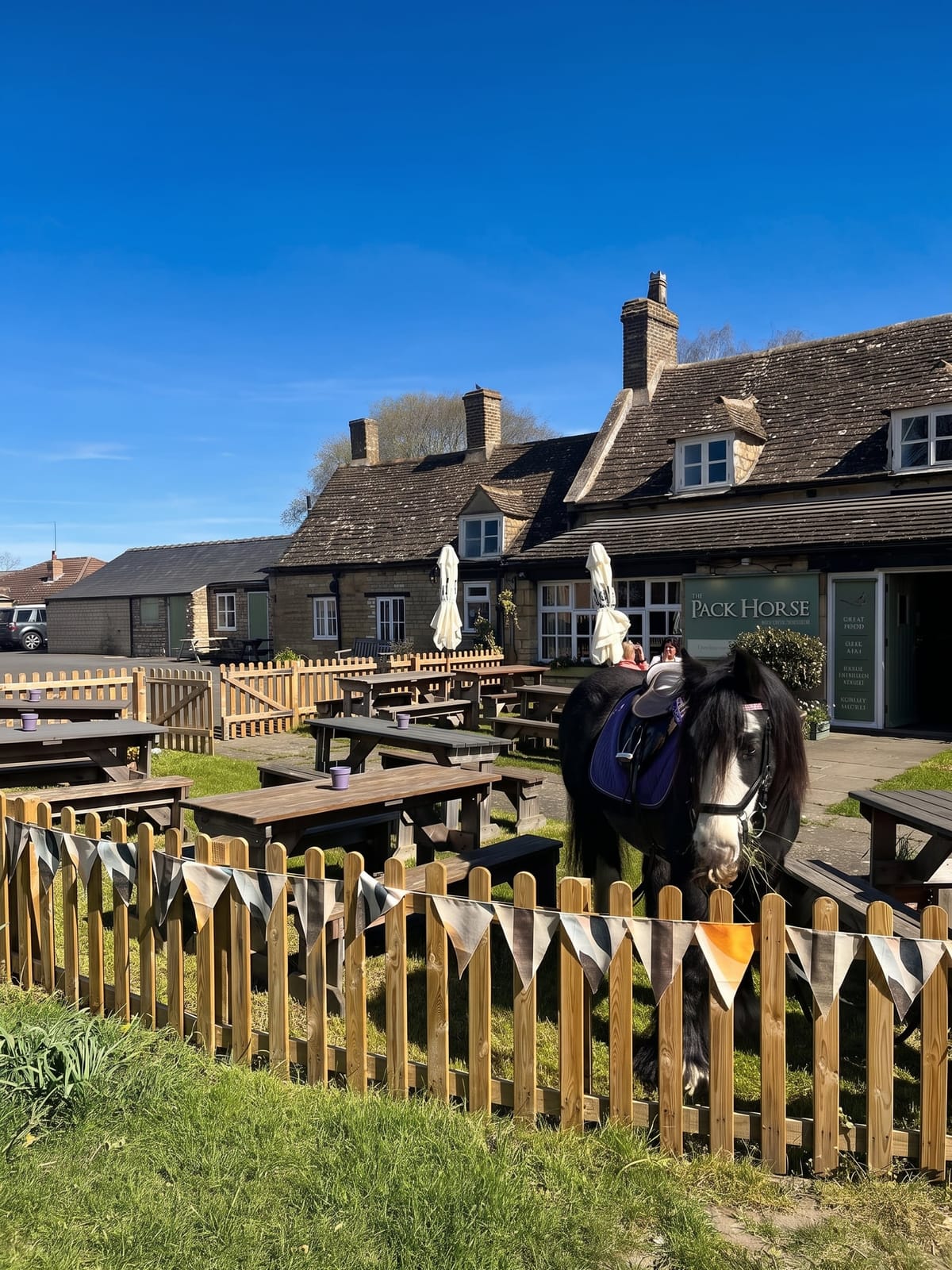
AT A GLANCE
Northborough in dates.
656
Northborough first recorded, as Northburh, in the Anglo-Saxon Chronicle.
c. 1180–1250
The nave of St Andrew's is built. The west wall is the oldest surviving part.
1330–40
The fortified manor house, also called the Castle, is built. The chantry chapel at St Andrew's follows in the same generation.
1572
James Claypole buys the manor. The family holds it for the next 116 years.
1646
John Claypole marries Elizabeth, Oliver Cromwell's favourite daughter, in Ely.
1665
Cromwell's widow Elizabeth, living with the Claypoles, dies at Northborough and is buried at St Andrew's on 19 November.
1681
The manor passes to Lord Fitzwilliam.
1832
John Clare moves from Helpston to a new cottage on Church Street.
1955–82
The manor, church, Clare House and The Pack Horse are all listed by Historic England.
THE PUB
The Pack Horse.
The pub stands at the junction of Lincoln Road and Church Street, across the road from the manor. Historic England lists it at Grade II and describes an eighteenth-century dressed stone building under a steeply pitched Collyweston stone roof, with three old hipped dormers and, at the north end, a lower wing that was probably once the stables.
Local tradition puts the building older still: probably seventeenth century, like much of the village. Inside it is a series of connected small rooms under the original timber-framed roof, once warmed and lit by inglenooks, the largest of which still dominates the main bar.
The two dates need not disagree. Stone buildings around here were often extended and given new fronts over the centuries, and the listing records what the surveyor could see from the road in 1982. The pub's story is still being pieced together with the village History Group, so if you know more about it, we would love to hear from you.
FROM THE LISTING
“C18 dressed stone building with steeply pitched Collyweston stone roof with coped gable ends. One storey and attic. Three old hipped dormers. End brick chimney stacks … Wing at north end, probably originally stables.”
Historic England, list entry 1331622, first listed 24 February 1982.
OLD PHOTOGRAPHS
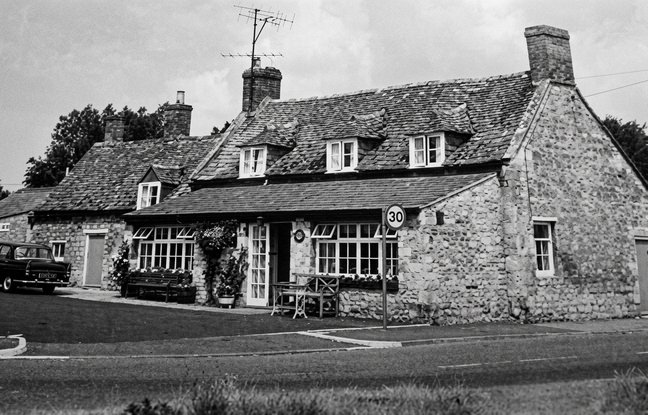
The Pack Horse from the road, with its three hipped dormers. 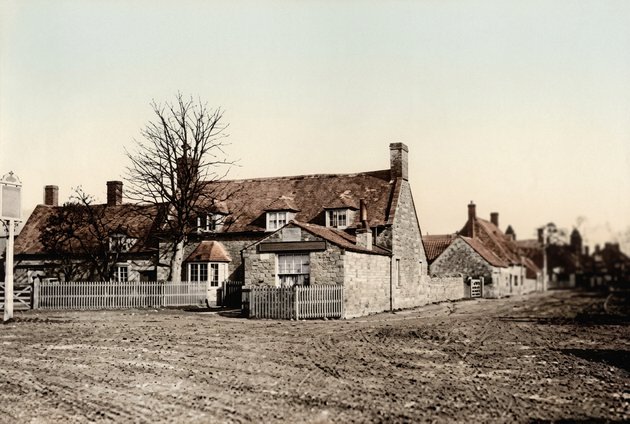
The pub on an old Seasons Greetings postcard. 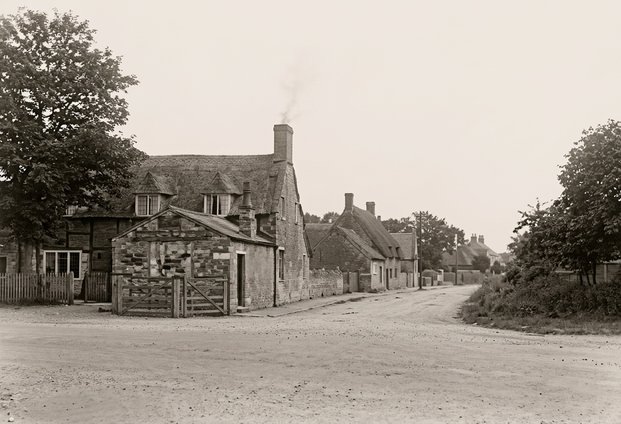
Northborough Village, from an old postcard.
THE MANOR
Northborough Manor, or “the Castle”.
Across Lincoln Road from the pub is one of the finest fortified manor houses in the county, built between 1330 and 1340. The listing credits the de la Mare family; other accounts name Roger de Northburgh, Bishop of Lichfield, who took his name from the village. The great hall and the gatehouse survive from the medieval house, with early seventeenth-century alterations, and the whole is Grade I listed.
In 1572 the manor was sold to James Claypole, and it stayed with the Claypoles until 1681, when it passed to Lord Fitzwilliam. The deed of sale, dated 15 February 1572, records John Brown, a draper of London, selling it for £500 to “James Claypoole, yeoman of Northborough”. That family is why Northborough has a Cromwell story. On 13 January 1646 John Claypole married Elizabeth, Oliver Cromwell's favourite daughter. Cromwell is reputed to have visited; the Manor's own history says he spent Christmases here and that the gatehouse served as a garrison during the Civil War.
After the Restoration, Cromwell's widow Elizabeth came to live with her son-in-law at Northborough. She died here in November 1665.
The Manor was restored in the 1970s by the garden writer Roy Genders and is privately owned today. The gatehouse is let as holiday accommodation, and the house is open by appointment only, so please enquire with the Manor before planning a visit.
THE CHURCH
St Andrew's, the church of the two widows.
A few minutes from our front door, on Church Street, St Andrew's is Grade I listed. The nave dates from the late twelfth and thirteenth centuries and the west wall is the oldest part of the building. The aisles and the fine south doorway are thirteenth century, the porch fifteenth. Two bells hang in the bellcote at the west end: one cast around 1410, the other at the Stamford foundry in 1611.
What catches the eye is the very large south chantry chapel, built around 1330 to 1350 by the de la Mares of the manor and known ever since the Claypoles took the manor as the Claypole Chapel. It holds the monument of Sir James Claypole, who died in 1599, and beneath it, in the vaulted charnel house, lies Elizabeth Cromwell, Oliver's widow. The parish register records her burial on 19 November 1665. There is no gravestone or marker to see.
She is the first of the two widows. The second is Martha “Patty” Clare, wife of the poet John Clare, who died in 1871 and is buried in the churchyard with some of their children. The church is open daily and is part of the Nine Bridges Benefice, a group of five neighbouring parishes.
THE CLAYPOLES
James Claypole bought the manor in 1572. His great grandson John Claypole married Elizabeth Cromwell in 1646; she died in 1658 and was buried in Henry VII's chapel at Westminster Abbey, where her coffin was found again in 1869. Members of the family later emigrated to Pennsylvania and Barbados, and their descendants still keep in touch with the church.
THE POET
John Clare's ten years on Church Street.
On Monday 30 April 1832 the poet John Clare moved his family the three miles from Helpston, where he was born, to a thatched cottage on Church Street provided by his patron Lord Milton of the Fitzwilliam family. It had a sitting room he used as a study, a kitchen and back kitchen, three bedrooms upstairs and two acres of land, for around £15 a year.
The move unsettled him, but out of it came some of his best-known poems: The Flitting, dated 20 June 1832, Decay and Remembrances. He lived a total of ten years in Northborough before finally going into Northampton Asylum in 1841. Martha, known as Patty, stayed on in Northborough for the rest of her life and died on 5 February 1871. The cottage, now called Clare House and Grade II listed, still stands in its own grounds on Church Street. The cottage is now privately owned.
NORTHBOROUGH HISTORY GROUP
The people who know it best.
Northborough has its own village History Group, who have spent years gathering the detail behind the buildings on this page. If you have photographs or stories about the pub, we would be glad to see them, so do mention it when you are next in.
WALK IT
Manor, church, cottage, pint.
The manor is across the road, the church and Clare House are a few minutes down Church Street, and we are in the middle. Walk the lot and book a table for when you get back.
SOURCES
Where this history comes from.
- Historic England – Pack Horse Public House (list entry 1331622) – Grade II, listed 24 Feb 1982; C18 dressed stone, Collyweston roof, stable wing
- Historic England – Northborough Manor House (1126697) – Grade I, listed 15 Dec 1955; built 1330–40 by the de la Mares, sold to James Claypole 1565, to Lord Fitzwilliam 1681
- Historic England – Church of St Andrew (1126693) – Grade I; late C12–C13 nave, chantry chapel c. 1330–50, James Claypole monument 1594, Mrs Oliver Cromwell buried below the chapel
- Historic England – Clare House, 42 Church Street (1126732) – Grade II; the cottage given to John Clare by the Fitzwilliams
- CAMRA – Pack Horse, Northborough – Timber-framed roof, small connected rooms and inglenooks (its 16th-century date and almshouses story are not used)
- Northborough Manor – the Manor's own history – Roger de Northburgh, Cromwell's Christmases, the gatehouse garrison, Roy Genders' restoration, visiting
- Wikipedia – Northborough Manor House – 1333–36 dating to Roger Northburgh; Anthony Emery's assessment
- Wikipedia – Elizabeth Cromwell – Widow's move to Northborough, death November 1665, burial 19 Nov 1665 per the parish register
- Wikipedia – Elizabeth Claypole – Born 1629, married 13 Jan 1646, died 6 Aug 1658, buried Westminster Abbey
- Wikipedia – Northborough, Cambridgeshire – Northburh in the Anglo-Saxon Chronicle 656; population 1,318 (2011)
- Wikipedia – Soke of Peterborough – County history: Northamptonshire, then Huntingdon and Peterborough 1965, Cambridgeshire 1974, unitary 1998
- Northborough Parish Council – The Parish – Seven miles north of Peterborough; Neolithic to Roman finds; Clare's wife and daughter buried at St Andrew's
- The John Clare Society – Northborough – Move on 30 April 1832, Lord Milton's cottage, The Flitting, High Beach July 1837, Patty's death 5 Feb 1871
- The John Clare Society – Northampton Asylum – Back in Northborough from High Beach July 1841; admitted to the Northampton General Lunatic Asylum 29 Dec 1841
- Peterborough Churches – Northborough – West wall the oldest part; chapel c. 1350; bells of c. 1410 and 1611
- National Churches Trust – Northborough St Andrew – 'Church of the Two Widows'; Claypole emigration to Pennsylvania; opening hours